The Rise of AI in Marketing
Marketing has shifted from guesswork to data-driven precision. Today, companies have access to massive amounts of data from websites, social media, CRM systems, and advertising platforms. Artificial intelligence (AI) allows marketers to analyze this data, anticipate customer behavior, and target the right people at the right time.
This approach, known as predictive targeting, reduces wasted spend, increases campaign efficiency, and drives measurable results. By leveraging AI, brands can move beyond assumptions and make decisions based on actionable insights.
What Is Predictive Targeting?
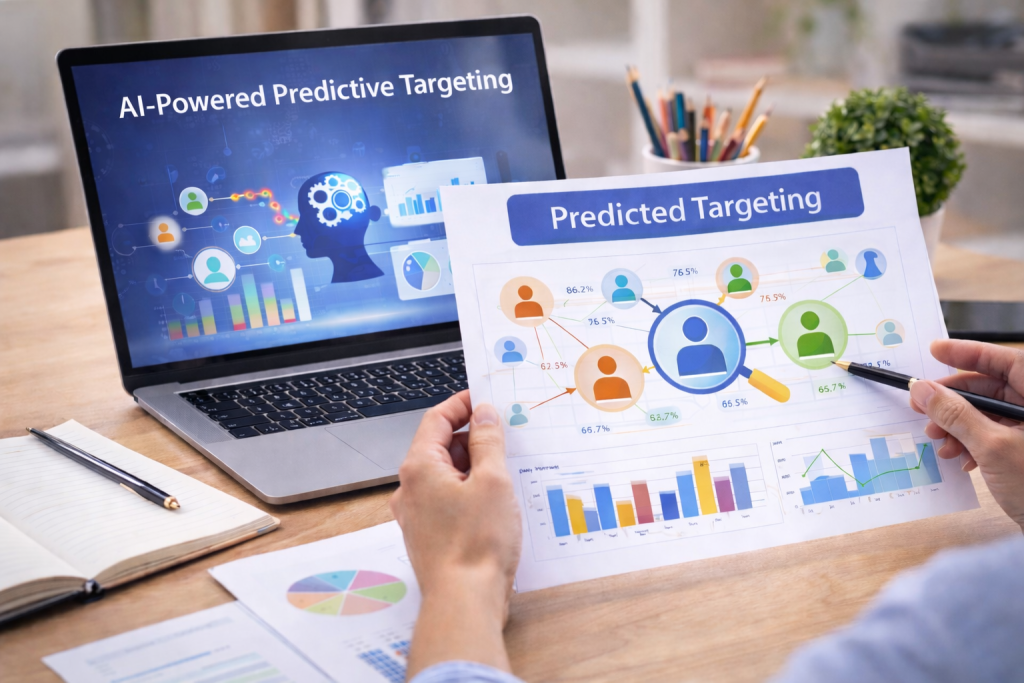
Predictive targeting uses AI and machine learning to forecast which customers are most likely to take a desired action—whether that’s making a purchase, downloading content, or engaging with an ad.
Unlike traditional targeting, which relies on broad demographics, predictive targeting anticipates future behavior. By analyzing historical interactions, demographics, purchase patterns, and engagement data, AI identifies high-value prospects and informs campaign strategy.
Key benefits include:
- Reduced ad spend waste
- More efficient audience segmentation
- Higher conversion rates
How Predictive Targeting Works
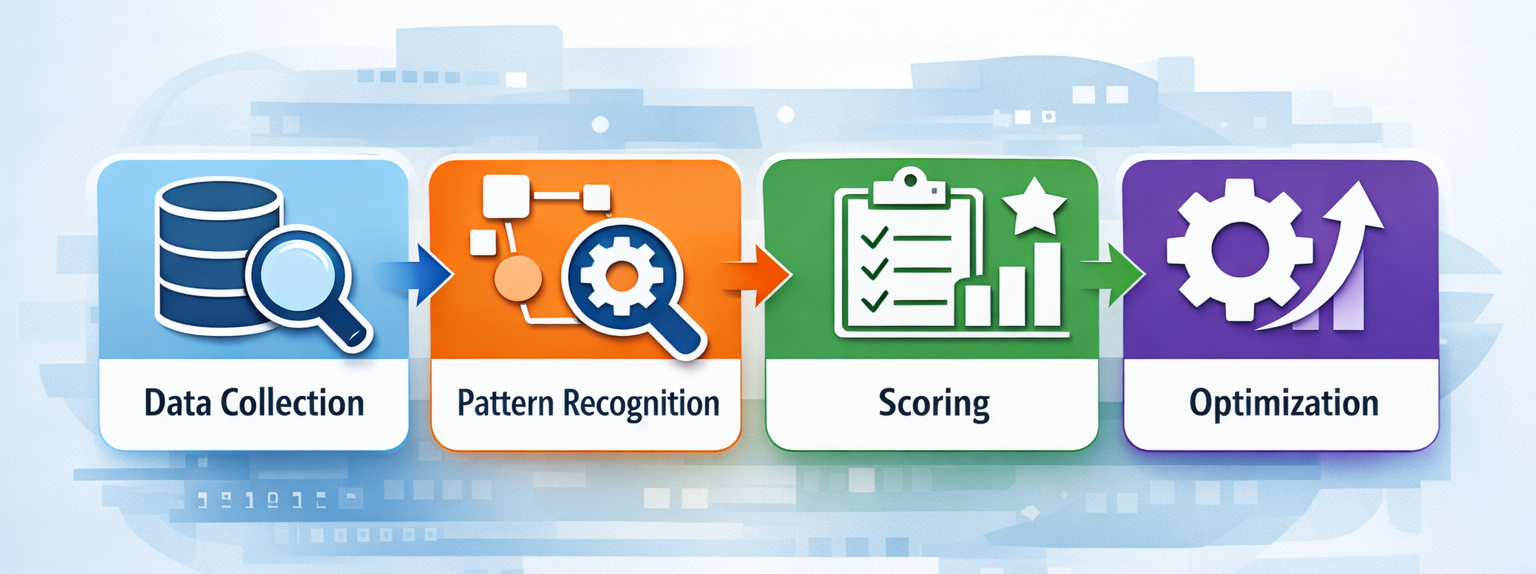
AI-powered predictive targeting relies on several key steps:
- Data Collection
AI models need large, high-quality datasets—from website visits and email interactions to CRM and social media data. The richer the data, the more accurate the predictions. - Pattern Recognition
Machine learning algorithms identify patterns in past behavior. For example, users who downloaded a whitepaper may be 3x more likely to request a demo within 30 days. - Audience Scoring and Segmentation
AI assigns scores to prospects based on their likelihood to convert. Marketers can focus on high-propensity audiences while reducing spend on lower-propensity groups. - Continuous Optimization
AI continuously learns from new data as campaigns run, adjusting predictions and targeting in real time to improve accuracy and performance.
Practical Applications Across Industries
Predictive targeting is highly adaptable:
- Automotive: Identify buyers likely to upgrade or replace their vehicle.
- B2B: Target decision-makers most likely to request demos or download content.
- Non-Profits: Focus outreach on donors likely to contribute.
- Retail & eCommerce: Personalize promotions for customers most likely to purchase.
Example:
A company launching a new product can identify users who have interacted with similar products in the past. Rather than pushing ads to a broad audience, predictive targeting focuses on high-propensity prospects—boosting conversions and reducing wasted spend.
Leveraging Predictive Targeting for Better Campaigns
Businesses can use predictive targeting to improve campaigns in three ways:
- Audience Identification: Focus on the prospects most likely to engage.
- Personalized Messaging: Deliver content and offers aligned with predicted preferences.
- Performance Optimization: Adjust campaigns in real time using AI insights, maximizing ROI.
By integrating AI-driven insights into campaigns, marketers can reach the right audience, at the right time, with the right message.
Predictive targeting powered by AI is transforming marketing. By forecasting customer behavior and focusing on high-value prospects, businesses can make campaigns more efficient, relevant, and profitable.
Start leveraging predictive targeting today to make smarter marketing decisions and maximize campaign ROI. Explore AI-driven insights to reach the right audience at the right time.